.jpg)


The Value of Human Insight: Enhancing Strategic Planning Beyond AI

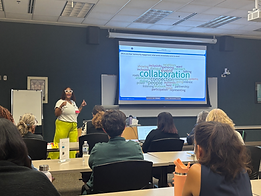
"AI can't get to the heart of your work". This was a statement I made during an initial networking opportunity with a fellow attendee of the 2026 Wisconsin Nonprofit Summit. After my workshop, she came up to me and introduced herself. We had some good conversation about her nonprofit in Kenosha, and I was really invested in the way she talked about her mission and some of the recent work her organization had with their community. I then shared more about my consulting work and my love for strategic planning and development. That's when it happened. She honestly shared with me that, due to a lack of funds and a rushed timeline (I believe a funder was requiring her to have one), she used AI to write her current strategic plan for her nonprofit.
I mean, I get it. I really do. I've used AI for some pieces of my work, especially as a solopreneur. Most of my clients are startups or small to mid-size nonprofits. Operating budgets are tight, and investing in full-on strategic plans or frameworks feels like a struggle considering the financial, capacity, and time commitments. But you really can't afford to trust artificial intelligence to write a plan that speaks to the heart of your nonprofit. Here are a few things I shared with her to ensure she felt heard while also cautioning her to reconsider this investment in her strategic plan.
Funders still want to hear from you
With the funding landscape in the nonprofit sector being competitive and sometimes complicated to navigate, an easy way to stand out when submitting funding requests is to be genuine with your materials. You understand the problem your nonprofit is trying to solve, the people, the community, and the challenges you're up against each day. Throwing a fancy prompt with your mission and some vague goals into a chat prompt can minimize these things and take away from the importance of telling the story fully and advocating for your nonprofit work.
Consultants can connect with the people
Strategic planning is a process. It requires a full analysis of where your organization has been, where it is, and what's realistic for where it can go. My strategic planning process always centers people doing the work and people impacted by the work. AI can't make follow-up phone calls seeking clarity on pre-work responses. AI can't sense energy shifts in a room when more difficult conversations come up. AI can't help to pivot when the original goals no longer feel tangible or aligned after review and intentional conversation. Connecting with people is the best way to create plans that live beyond the shelf. When people are included in the process, they're more likely to be invested in the process, and consultants are a great way to ensure the right voices are at the table and the right questions are being asked.
AI is a great tool for parts of the process
I'm not saying no to AI. I'm saying make sure you're not overly using it. Using AI to clean up narratives, analyze large data sets, or help with formatting works well. I strongly caution against using it to do all of the work from start to finish. Even the best prompts can leave out key pieces of the process, and a consultant can ensure that your approach to strategic planning is customized and relevant to you and your impact.
After that conversation, we connected on LinkedIn and had some great follow-up conversations about things she can be doing right now to prepare for her more comprehensive and inclusive strategic planning process, even if I'm not the one to lead it. I want to see her win. I want small nonprofits with challenges in capacity and funding to still find a way to be intentional about anything they're attaching their name to. If you don't have the money for a strategic plan or strategic framework process, there are still things you can be doing to create documents and roadmaps to guide nonprofit decision-making.
Ensure you're gathering feedback from your community often and make sure it's qualitative and quantitative.
Seek funding opportunities to support strategic planning, governance support, and capacity building.
Keep updated data and find creative ways to track it and share it with funders, community members, and supporters.
Talk to staff and volunteers often about what's working, what can be done better, and what should be stopped due to lack of effectiveness
Use what you have to make decisions. Don't just collect data and stories and sit on them. Use them to improve programs, communication, and services, and share often that changes are directly informed by feedback and data, and not just feelings.
I'm always open to chat about these types of things, so feel free to email me anytime so we can lock in some time and make the best of the summer for you and your nonprofit community.
I'm rooting for you always,
RBJ 💜


Comments